I finally took the plunge. After a few months of wavering, I finally jumped on the DSL bandwagon - mostly because Earthlink offered to give it to me for the same price as what I currently pay for dial-up. I figured I didn't have anything to lose. Even better, five days after I signed up for DSL the modem arrived, and I thought I was on my way to streaming audio and skipping from website to website as though I were dancing on clouds. I was footloose and fancy free ... until I hooked up the modem and - wallah - no DSL!
For the past week two weeks, I've been trying to "troubleshoot" what the problem is, which means I've been calling 1-888-Earthlink over and over again. Finally, though, I got them to send out a technician yesterday, and he confirmed that my telephone line hasn't been wired yet for DSL service. He then informed me that our line is serviced by an SBC building two blocks north of us ... "shouldn't be a problem getting that up by tomorrow morning," he assured me. But when the modem still showed no signs of life this morning, I was back on the phone - pushing numbers to direct me through customer service labrynth.
As it stands now, we're just waiting for the technicians in the building just two blocks away to make the connection. Of course, there is no direct number to get a hold of them. Instead, we call another 1-800 number and speak to somebody over in India. Oh, it is driving me insane.
Thankfully, to keep me from breaking, we got the best Christmas gift ever imaginable: MacGyver - the First Season. First off, I had no idea that Henry Winkler (aka 'the Fonz') produced the show. Secondly, I forgot how corny and easy natured 80's shows are. We've watched two shows already, and we've also made some other assessments:
-Criminals and bad guys in the 80's were ridiculously bad shots - often missing from less than twenty feet (and with automatic weapons to boot!)
-Narration by the hero is intended to be cool, but upon closer examination it is often just corny
-Solving intensely difficult problems or overcoming tremendous odds is much easier when you've got video editing, stunt doubles, and only fifty-five minutes of air-time.
Which leads me to one final conclusion: life is simply not television. The fantasy that was MacGyver or Magnum P.I. is a far cry from the reality of day-to-day. In real life, villians aren't shown in profile in the first thirty seconds of the show, and life's problems often don't involve international drug lords, toxic gas leaks, or the threat of nuclear holocaust. Life is more sordid, less absolute and much more confusing. I spent my day fumbling my way through automated voice mail messages, and as far as I could tell, there was no easy way around the madness. Then again, I'm not MacGyver.
Wes
Wednesday, December 28, 2005


Tuesday, December 20, 2005
Back at it

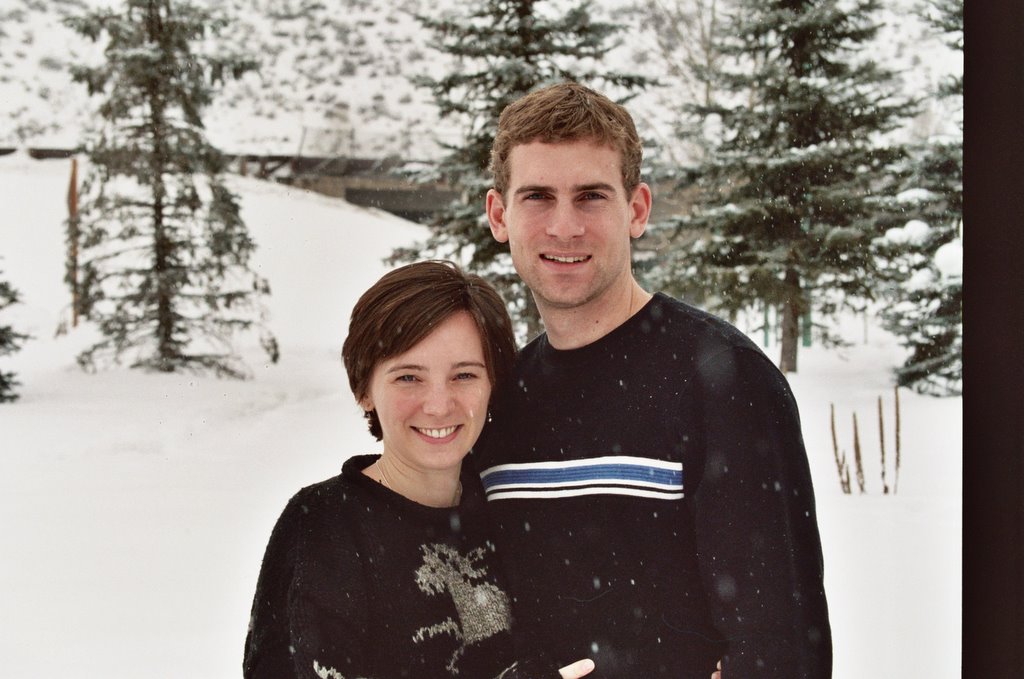
It's been a wild couple of weeks for Anna and I, and we made things absolutely crazy this past weekend. Since our little CRX doesn't hold more than two people and lacks a back seat, we drove over 1800 miles to Avon, CO to switch cars with the family (sidenote: I hope not to offend Brian, Rachel, Gayle and Ryan by laying this tantalizing fact out there, since we were a few hours away from Denver. Believe you me: if we could have gone the extra couple hours and enjoyed a brief stay, we would've. But I digress ...). The trip was like a marathon, spiritual journey and plunge into the twilight zone. Nothing like driving through the Joshua trees of the Mojave, the glittering neon lights of Vegas and through the cascading snow of the Rockies all in one day.
To make the trip, we drove from 5:30 am on Saturday morning 'till 11:30 pm that night, slept till 9 am and hit the road after breakfast at Denny's. All said and done, we made it back to Pasadena after $114 in gas, two stops at Arby's, a double-double from In n' Out and many miles of daydreaming and singing along to cd's (just bought David Gray's "Life in Slow Motion"; very soothing and rhythmic, excellent for the decending hours of dusk).
What was really hard was the amount of dark hours we experienced since we drove away from the sun the first day and couldn't catch up to it the second. There's nothing like seeing the sun set at 4 pm California time and knowing there's six mores hours to drive.
Arizona seemed like a dream that Nicolas Cage had in "Raising Arizona", and parts of Utah looked like the end of "Terminator 2". But perhaps the most surreal stretch of the drive came on I-70 east as the highway snaked its way through a valley with water flowing west beside the highway and snow softly falling. Meanwhile, a train heading east was barrelling along beside the highway - moving silently around and through mountains while its yellow-white light shone forth onto canyon walls. By the way, did I mention a big ol' buck tried to cross in front of our car at one point. It thought better when I flashed my brights and honked the horn while hurtling towards it at 70 mph. That was the closest we came to danger; thanks be to God for keeping us safe and sound.
Also a big thanks to Drew for being a great bro and sacrificing more than a few days to make the other side of the trip. His was actually longer - over 2,000 miles (But then again, he also got to ski in Avon). It was great to catch up with him, and we all three enjoyed the briefest of minutes we had over breakfast. We got some great pics in the snow - one of them is at the top.
Anyhow back to my original point: things have been crazy lately. And the haste around the holidays has left Anna and I saddened. For the first time, we both feel Christmas is coming too fast. Perhaps more disturbing, it's been hard for us to reflect upon and enjoy this season. Connecting with family, reflecting on the year gone by and the year ahead, giving gifts from our heart and meditating upon the gift of Jesus Christ have alluded us by and large.
While going through these delirious days, I've also realized that a great many Christmas stories/movies are centered upon this theme: life begins to move irreconciably out of control which causes great consternation or sadness. But just when things seem lost, life is restored and new opportunities are granted. Such are the tales of Ebenezer Scrooge and his depleted existence or Clark Griswald's doomed Christmas hopes. So perhaps this more to be said about this Christmas season.
We have continued to get some wonderful cards, emails and gifts from friends and family, which has been a blessing. Even if our communication and support has been sparse, we are both thankful others have been more gracious. It is hard being far apart from people we love - always, Christmas just accentuates the reality.
Anna has been battling a wicked cough the last few days, and she acted wisely by taking work off today. It's amazing how emotional, pyschological and spiritual diress manifest themselves in physical ways. Anna noticed last week that our little boy to be wasn't nearly as active, either - a fact we attribute to stress. But no worries; we've restocked our pantry and gotten some Echinacea tea to stir up some good health. Plus, seventy degrees and sunny can't hurt the cause, which is what it was today in Pasadena.
...
Only a few more days to go before Christmas Eve. Peace to all.
Wes
Thursday, December 08, 2005
An Active Little Guy
For the last hour, I've been combing through Google sites trying to find boy names. Anna and I have yet to land on a "this-is-it" name for our soon to be son, so we've been sounding out combinations and even going so far as trying out a couple for a few days. It does seem inherently wrong to be auditioning names as though they were a cell phone plan or a car. But if those sorts of things are worth a little time, research and test drives, why shouldn't a name be as well?
In fact, there's really a bunch of similarities between names and cars. You can go with an old standby like Adam or Michael, which is like a Ford or a Honda, and you're bound to get acceptance by the vast majority. Plus, there's less risk with names like these. For instance, if something goes wrong with your Ford it's because the whole American manufacturing system is defunct. Likewise, the only people the Adam's and Michael's have to blame for their failure or frustration is something broad and indefinite like politics or economics.
However, the exact opposite is true for names like Abner or Tobias. Here you run the risk of having a budding noble prize winner, runway model or social outcast - the fine line between the Porches of the world and the Delorean that only raced through Back to the Future.
Of course, the most recent trend is to adjust a middle-of-the-road sedan name like Michael or Caleb by using a new spelling, such as Kaleb. In the end, though, it's pretty much like tricking out your Honda Civic: if it's not done well, it just looks crappy and may even be a sign of white trash.
Anyhow, everything continues to go well with the pregnancy, and our little guy is getting more and more active. For the last two nights, he's been wiggling, kicking and turning for an hour. Anna was spell-bound by all this activity, and I don't blame her. I put my hand on her belly and felt him shifting around, making a bump here and a poke there. It's just surreal and awesome. I'll see Anna grin and look at her belly with wide eyes. Then Anna will place her hands on her stomach and wait - letting her senses take over and allow movement to speak to her - the subtle communication of new life. I too let my hands feel and sense this movement, but I know I'm on the outside looking in. What must it be like to have a human being pulse and move within you? This to me is the miracle of motherhood.
Wes
In fact, there's really a bunch of similarities between names and cars. You can go with an old standby like Adam or Michael, which is like a Ford or a Honda, and you're bound to get acceptance by the vast majority. Plus, there's less risk with names like these. For instance, if something goes wrong with your Ford it's because the whole American manufacturing system is defunct. Likewise, the only people the Adam's and Michael's have to blame for their failure or frustration is something broad and indefinite like politics or economics.
However, the exact opposite is true for names like Abner or Tobias. Here you run the risk of having a budding noble prize winner, runway model or social outcast - the fine line between the Porches of the world and the Delorean that only raced through Back to the Future.
Of course, the most recent trend is to adjust a middle-of-the-road sedan name like Michael or Caleb by using a new spelling, such as Kaleb. In the end, though, it's pretty much like tricking out your Honda Civic: if it's not done well, it just looks crappy and may even be a sign of white trash.
Anyhow, everything continues to go well with the pregnancy, and our little guy is getting more and more active. For the last two nights, he's been wiggling, kicking and turning for an hour. Anna was spell-bound by all this activity, and I don't blame her. I put my hand on her belly and felt him shifting around, making a bump here and a poke there. It's just surreal and awesome. I'll see Anna grin and look at her belly with wide eyes. Then Anna will place her hands on her stomach and wait - letting her senses take over and allow movement to speak to her - the subtle communication of new life. I too let my hands feel and sense this movement, but I know I'm on the outside looking in. What must it be like to have a human being pulse and move within you? This to me is the miracle of motherhood.
Wes
Wednesday, November 16, 2005
Here's Johnny ... Johnny Cash that is
If you watched the special on CBS tonight, you heard some of Johnny Cash's classics - including one of my favorites, the Wanderer (originally performed with U2). Over the last year, I've been introduced to Cash's music, and I'm the better for it. We'll soon see if the movie about him is able to capture some of the mystique and power of his life and music. I hope so.
The upcoming movie also reminded me of a story which I had hoped to publish on Relevantmagazine.com. Unfortunately it never made their site, so I'll do my own publishing this time. The story was written in the early part of '05 - when I was listening to Johnny Cash for the first time and the world was awaiting the fate of Pope John Paul II. Here's the story:
Somewhere in heaven the man in black has probably tipped his hat to the man in white. Call me speculative or even ludicrous, but I would like to believe Pope John Paul II was welcomed into the heavenly realms with a firm but cordial handshake from Johnny Cash. Yes, I am serious, and I mean the comparison with the utmost respect for the Pope, Catholics and Country music fans worldwide.
Though John Paul II and Johnny Cash had their obvious differences, the similarities between the two men run deep. Both men were icons for their people. Both were known as common men – able to embrace all levels of society. And no similarity is more significant than the way both men identified themselves with suffering and with the meek. They were champions of a humble road, and thus a lighthouse for our sleek, sitcom world.
Pope John Paul II welcomed his later years of suffering as a powerful, redemptive experience. The Vatican newspaper suggested in February the Pope was participating in the suffering of Christ and said “the bed of pain” had become the “the cathedral of life.” Though he passed away quietly in his apartment, his weakness was not hidden. His head held low, his words inaudible, he appeared just days before his death to pray and to bless.
The Pope’s final days were a stark contrast to his early days as Pontiff. When he became Pope twenty-six years ago he was athletic, determined and charismatic – attributes he would use as a world evangelist. Some even assert Pope John Paul II helped topple communism in his home country, Poland, and beyond.
However, his powerful influence emerged out of a humble and harsh childhood. He experienced the greatest tragedy of the 20th century when his country was occupied by Nazi Germany. More intimately, three of his family members, including his mother, died before he reached his 13th birthday.
Against this backdrop of sorrow and with his own health deteriorating, he freely acknowledged in 1994 “the pope must suffer so that every family and the world should see that there is...a higher gospel: the gospel of suffering, with which one must prepare the future.” His last act of leadership was to remind us that even godly, bold people still suffer and die.
Johnny Cash had his own way of walking the rugged road of death and suffering. Known as “the Man in Black,” Johnny Cash once sang “I shot a man in Reno/Just to watch him die.” This song and several others from Cash have gritty language more suitable for prison yards than churches. But the harsh side of Johnny Cash was more musical folklore than truth. In reality, his attitude was down-to-earth – mirroring the somber sound of his baritone voice. And his song “Man in Black” revealed Cash’s willingness to identify himself with the underprivileged and unknown, including these lyrics:
I wear the black for the poor and the beaten down,
Livin' in the hopeless, hungry side of town,
I wear it for the prisoner who has long paid for his crime,
But is there because he's a victim of the times . . .
Well, we’re doing mighty fine, I do suppose,
In our streak of lightnin’ cars and fancy clothes,
But just so we’re reminded of the ones who are held back,
Up front there ought ‘a be Man in Black.
Both John Paul II and Johnny Cash could have chosen different styles to demonstrate their fame in this world. They could have gone the way of many stars and people of power: building barriers between themselves and others. Thankfully, though, they chose a different path, the more difficult path. Pope John Paul II chose his years of suffering as a road to compassion, not isolation. Likewise, Johnny Cash chose to remember people others would just as soon forget. Both men dared to keep the door to brokenness open, knowing that many roads to heaven pass initially through Gethsemane and Golgotha.
So my idea may not be ludicrous after all. Pope John Paul II, the man who ended his earthly days hunched in white robes, was likely welcomed by a whole host of saints and angels. And I would like to believe up there in front somewhere Johnny Cash got a chance to say hello and welcome a friend.
What is certain is the legacy these two men left: modern examples of Christ-like compassion. They left some big shoes to fill, or should I say, some important clothes to wear. And regardless of what clothes you wear – black or white – you may want to reflect on the Pope’s final messages while listening to some Johnny Cash. I think they would be pleased, and you would be enriched.
The upcoming movie also reminded me of a story which I had hoped to publish on Relevantmagazine.com. Unfortunately it never made their site, so I'll do my own publishing this time. The story was written in the early part of '05 - when I was listening to Johnny Cash for the first time and the world was awaiting the fate of Pope John Paul II. Here's the story:
Somewhere in heaven the man in black has probably tipped his hat to the man in white. Call me speculative or even ludicrous, but I would like to believe Pope John Paul II was welcomed into the heavenly realms with a firm but cordial handshake from Johnny Cash. Yes, I am serious, and I mean the comparison with the utmost respect for the Pope, Catholics and Country music fans worldwide.
Though John Paul II and Johnny Cash had their obvious differences, the similarities between the two men run deep. Both men were icons for their people. Both were known as common men – able to embrace all levels of society. And no similarity is more significant than the way both men identified themselves with suffering and with the meek. They were champions of a humble road, and thus a lighthouse for our sleek, sitcom world.
Pope John Paul II welcomed his later years of suffering as a powerful, redemptive experience. The Vatican newspaper suggested in February the Pope was participating in the suffering of Christ and said “the bed of pain” had become the “the cathedral of life.” Though he passed away quietly in his apartment, his weakness was not hidden. His head held low, his words inaudible, he appeared just days before his death to pray and to bless.
The Pope’s final days were a stark contrast to his early days as Pontiff. When he became Pope twenty-six years ago he was athletic, determined and charismatic – attributes he would use as a world evangelist. Some even assert Pope John Paul II helped topple communism in his home country, Poland, and beyond.
However, his powerful influence emerged out of a humble and harsh childhood. He experienced the greatest tragedy of the 20th century when his country was occupied by Nazi Germany. More intimately, three of his family members, including his mother, died before he reached his 13th birthday.
Against this backdrop of sorrow and with his own health deteriorating, he freely acknowledged in 1994 “the pope must suffer so that every family and the world should see that there is...a higher gospel: the gospel of suffering, with which one must prepare the future.” His last act of leadership was to remind us that even godly, bold people still suffer and die.
Johnny Cash had his own way of walking the rugged road of death and suffering. Known as “the Man in Black,” Johnny Cash once sang “I shot a man in Reno/Just to watch him die.” This song and several others from Cash have gritty language more suitable for prison yards than churches. But the harsh side of Johnny Cash was more musical folklore than truth. In reality, his attitude was down-to-earth – mirroring the somber sound of his baritone voice. And his song “Man in Black” revealed Cash’s willingness to identify himself with the underprivileged and unknown, including these lyrics:
I wear the black for the poor and the beaten down,
Livin' in the hopeless, hungry side of town,
I wear it for the prisoner who has long paid for his crime,
But is there because he's a victim of the times . . .
Well, we’re doing mighty fine, I do suppose,
In our streak of lightnin’ cars and fancy clothes,
But just so we’re reminded of the ones who are held back,
Up front there ought ‘a be Man in Black.
Both John Paul II and Johnny Cash could have chosen different styles to demonstrate their fame in this world. They could have gone the way of many stars and people of power: building barriers between themselves and others. Thankfully, though, they chose a different path, the more difficult path. Pope John Paul II chose his years of suffering as a road to compassion, not isolation. Likewise, Johnny Cash chose to remember people others would just as soon forget. Both men dared to keep the door to brokenness open, knowing that many roads to heaven pass initially through Gethsemane and Golgotha.
So my idea may not be ludicrous after all. Pope John Paul II, the man who ended his earthly days hunched in white robes, was likely welcomed by a whole host of saints and angels. And I would like to believe up there in front somewhere Johnny Cash got a chance to say hello and welcome a friend.
What is certain is the legacy these two men left: modern examples of Christ-like compassion. They left some big shoes to fill, or should I say, some important clothes to wear. And regardless of what clothes you wear – black or white – you may want to reflect on the Pope’s final messages while listening to some Johnny Cash. I think they would be pleased, and you would be enriched.
Friday, November 11, 2005
Efficiency vs. Intimacy
For the last month and a half, I have been employed as a bank teller, and it has been a frightening introduction to the pace and expectations of service jobs. Let me preface all of this by saying the last customer service job was also my first: a grocery bagger. Back then, my job performance was entirely about efficiency and effectiveness in processing a customer's grocery assortment. Ask whether the customer prefers paper or plastic, keep the eggs and bread near the top, build off a foundation of cereal boxes and soup cans, pack perishables separately, and always keep cleaning products separately: these were the fundamental rules of a bagger.
Nowadays, I live by different, yet similar rules: enter various computer codes for various transactions, ask to see a driver's license for any cash withdrawal, keep focused on one transaction at a time, and always count money three times. Like my job as a bagger, the goal is efficiency and effectiveness, and there's two different ways I can know if I'm not hitting these marks. First of all, some customers have an incredible if annoying habit of letting me know when I am not processing their transactions quickly enough. The security glass between myself and members can prevent bullets from ending my life, but it can't protect me from angry glares and critical comments. Sticks and stones, right? Secondly, the managerial side of the branch is continually gauging my accuracy and speed in helping member's perform their banking needs. The ultimate test comes at the end of the day - is my cash drawer balanced or not? So there I sit as a bank teller, positioned obediently between the ongoing demands of personal finance and the ever-seeing eye of a security camera over my right shoulder. Both sides expect excellent service. I am essentially a conduit between consumer and producer - a middle man between those with financial needs and those with financial answers.
So the question I have to ask myself is why does a human being fill this job? If I am correct in that the necessities and goals of my position are effectiveness and efficiency, than it seems a computer would be a better employee. Not surprisingly, that is becoming more of the standard in the customer service world. Automated phone services and internet outlets are beginning to dominate as the only option for speaking to a company.
But the credit union I work for has decided that customer service is how they are going to differentiate themselves in a sea of financial options. The credit union realizes that regardless of how many mistakes a human being will make (about five a day for me), some people would much prefer driving ten miles to wait in a ten minute line to speak to a human being than getting on the internet and making an ebranch transfer.
Consequently, I find myself in the middle of a much larger struggle occurring in our world - a struggle between efficiency and intimacy. And I find my current employment situation to be a good reflection of these two forces. As a bank teller, I am challenged by forces of depersonalization and utilitarianism. As a disciple of Christ and as a pastor of God's people, I am challenged to make life ever more personal and to treat all peoples as God's children - regardless of a persons social value.
I am seeking that place Bonhoeffer said is where "your deep gladness and the world's deep hunger meet." Whatever it is that I am called to, I hope and believe that it will mean an enlargement of my spirit and personality.
Wes
Nowadays, I live by different, yet similar rules: enter various computer codes for various transactions, ask to see a driver's license for any cash withdrawal, keep focused on one transaction at a time, and always count money three times. Like my job as a bagger, the goal is efficiency and effectiveness, and there's two different ways I can know if I'm not hitting these marks. First of all, some customers have an incredible if annoying habit of letting me know when I am not processing their transactions quickly enough. The security glass between myself and members can prevent bullets from ending my life, but it can't protect me from angry glares and critical comments. Sticks and stones, right? Secondly, the managerial side of the branch is continually gauging my accuracy and speed in helping member's perform their banking needs. The ultimate test comes at the end of the day - is my cash drawer balanced or not? So there I sit as a bank teller, positioned obediently between the ongoing demands of personal finance and the ever-seeing eye of a security camera over my right shoulder. Both sides expect excellent service. I am essentially a conduit between consumer and producer - a middle man between those with financial needs and those with financial answers.
So the question I have to ask myself is why does a human being fill this job? If I am correct in that the necessities and goals of my position are effectiveness and efficiency, than it seems a computer would be a better employee. Not surprisingly, that is becoming more of the standard in the customer service world. Automated phone services and internet outlets are beginning to dominate as the only option for speaking to a company.
But the credit union I work for has decided that customer service is how they are going to differentiate themselves in a sea of financial options. The credit union realizes that regardless of how many mistakes a human being will make (about five a day for me), some people would much prefer driving ten miles to wait in a ten minute line to speak to a human being than getting on the internet and making an ebranch transfer.
Consequently, I find myself in the middle of a much larger struggle occurring in our world - a struggle between efficiency and intimacy. And I find my current employment situation to be a good reflection of these two forces. As a bank teller, I am challenged by forces of depersonalization and utilitarianism. As a disciple of Christ and as a pastor of God's people, I am challenged to make life ever more personal and to treat all peoples as God's children - regardless of a persons social value.
I am seeking that place Bonhoeffer said is where "your deep gladness and the world's deep hunger meet." Whatever it is that I am called to, I hope and believe that it will mean an enlargement of my spirit and personality.
Wes
Subscribe to:
Posts (Atom)


 Posts
Posts

